


Vivid Broadcast combined Calrec True Control 2.0-enabled Argo M and Type R consoles across its remote operations, preparing its team for multiple production processes and project types.
Based in Surrey, UK, Vivid Broadcast is an early adopter of remote production, having embraced remote workflows long before the demands of the pandemic made them a regular feature of many productions. Francis Cousins, Vivid Broadcast's Head of Technical Innovation said, "Flexibility has to be at the heart of any remote production set up. It was vital for us to have a range of solutions that gave each gallery or production the tools they need to do the job while working within budget.”
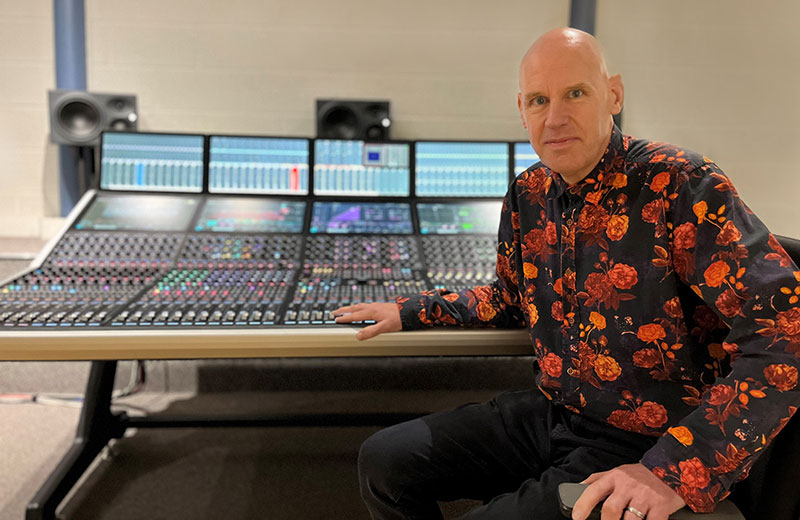
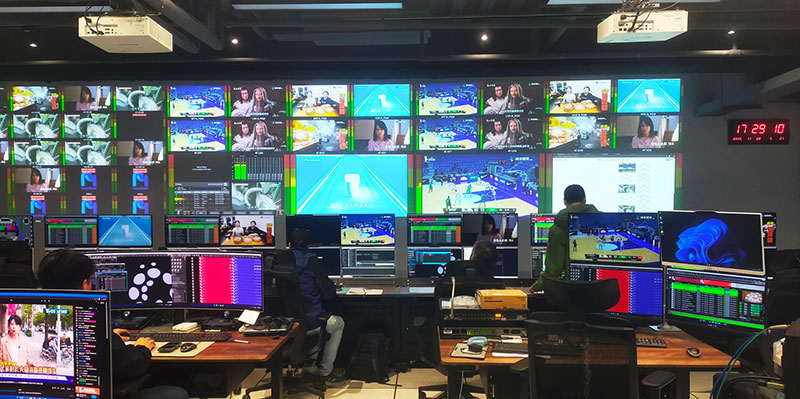
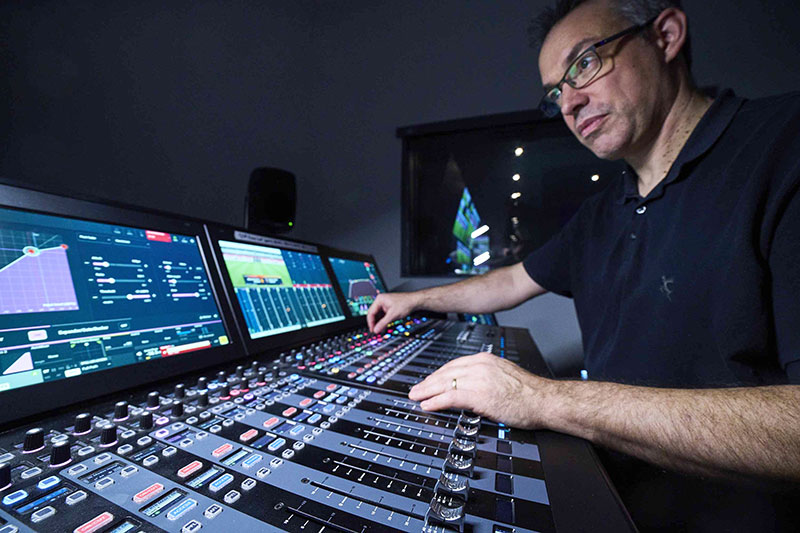
The company has installed a 36-fader Calrec Argo M and multiple Type R control surfaces in its Remote Production Centre (RPC). Within its new OB vehicle, a 48-fader Argo M, which Calrec launched recently, has been installed as well.
Built for Live
Purpose-built to handle live workflows, the new OB unit, called Barra, is already showing its suitability as an extension for the RPC, which is currently being used for Sky Sports Women's Super League (WSL), feeding directly into Sky's galleries in Osterley. Simon Cox, Vivid Broadcast's Sound Guarantee said the new 48-fader Argo M is a good match for the remote unit
"To bring the audio into the desk, we use AES67 audio interfaces deployed within the stadium, combined with traditional backups to fulfil contractual requirements. This incorporates some of the Argo M's local I/O alongside the AoIP links to the main network stack, and allows Dante, MADI and analogue cards to all be installed into the modular I/O of the Calrec.”
In turn, this combination supports integration with third-party baseband equipment, and allows the use of Calrec Fixed Format I/O hardware to keep everything in the digital domain where possible. The fixed format IP I/O devices supply the necessary quantity and type of signal format, wherever it is needed. Each type of I/O box contains a set number of inputs and outputs, all of the same type/signal format.
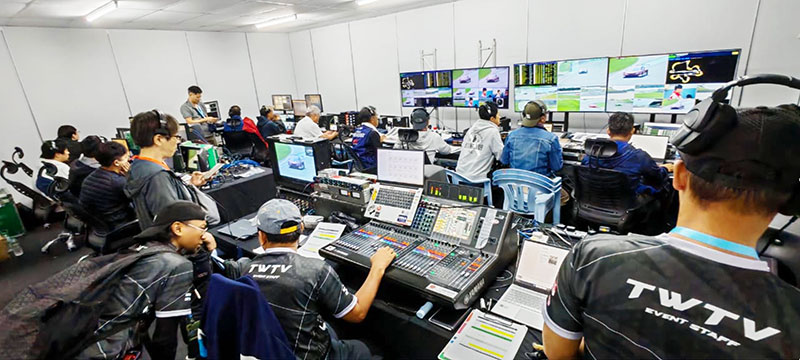
The RPC integrates directly with Vivid Broadcast's four-camera remote vans, as well as the 20-camera Barra unit, cloud production platforms and third-party client broadcast centres which, according to Francis, gives production teams the ability to work more efficiently and quickly, while using fewer resources.
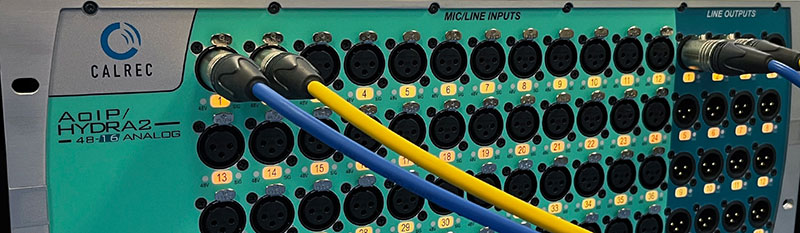
Fixed Format I/O
Connections Everywhere
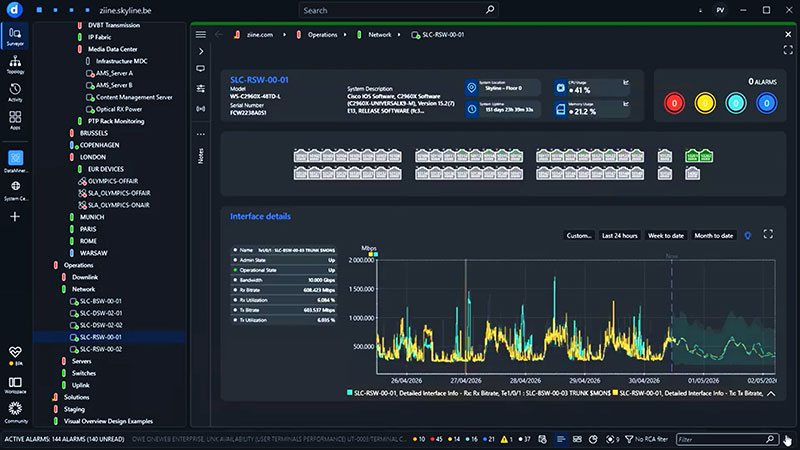
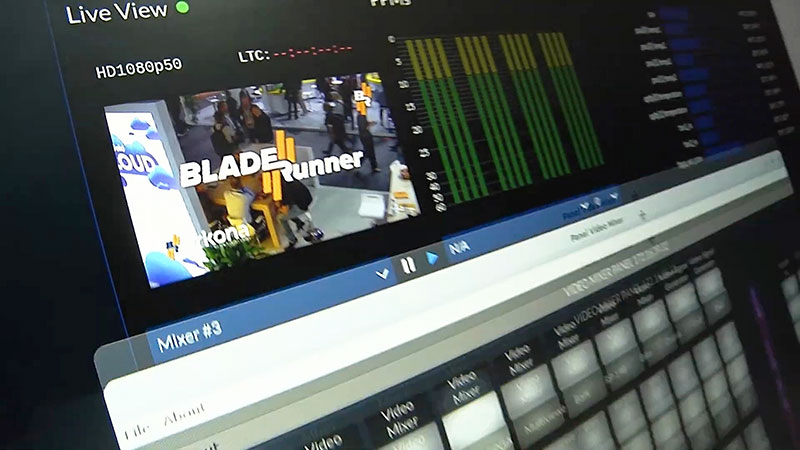
Vivid also takes advantage of the Calrec Assist browser-based control interface for real-time, interactive access to the console – including faders, routing, metering and so on – to manage the desk remotely. The Calrec Connect IP connection and stream manager manages every audio stream and device on the network and covers IP devices from any manufacturer or discovery protocol such as NMOS, AES70 or more specific REST APIs.
In particular, Vivid wanted to design the RPC so that the sound control rooms could work across multiple galleries. The 36-fader Argo M sits in Sound Control Room 1 alongside four virtual mixers split across two compact Type R control surfaces that can be located in multiple galleries.
Fewer Limitations, More Control
"During a production, the Type Rs can be driven by our Bitfocus Buttons automation/control system, which means a single supervising engineer can lead across all galleries and make fine adjustments to the mixes," said Simon Cox. "For more ambitious projects, the Type Rs can be driven from the main Argo surface via True Control 2.0, equipping other engineers with ample control and simple access to the wider facility."
True Control 2.0 is Calrec’s remote production functionality that gives full, continuous command of Calrec’s IP consoles, which can be located anywhere. As well as adding flexibility, True Control 2.0 gives broadcasters options to scale their remote productions, disaster recovery, remote operations, back-up scenarios and enhanced effects mixing by expanding the number of products they can connect to.
It also avoids the limitations of mirroring or parallel controlling, and includes control of EQ, dynamics, routing, direct outputs and delay.
Wider Variety of Projects
Vivid's flexible setup enables the company to work across a much wider variety of projects and clients, delivering live coverage not only for sport and entertainment, but also for corporate events, fashion and varied hybrid productions.
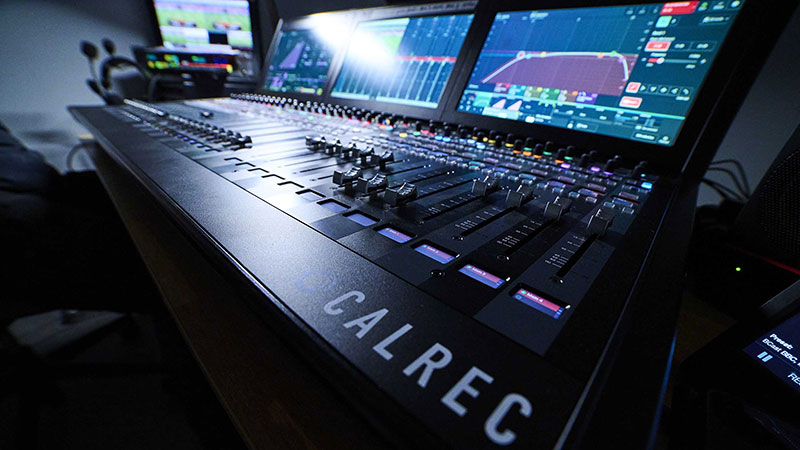
"We look for equipment that supports powerful external control and monitoring to give engineers a granular level of visibility from any remote location,” Francis noted. “The abundant features in Calrec's hardware and web interfaces are critical in achieving that control, as well as their strong integrations and support.”
Similar to traditional OBs, each remote project has its own requirements and can utilise a number of workflows. The team aimed to create a scalable environment that can embrace many different production processes and give production teams the same gallery experience, whether they are working in a traditional workflow with all signals returning to the RPC, a cloud operation or hybrid.
The remote sound area can operate efficiently with a single operator or accommodate a dedicated sound supervisor when required, while the Argo M supports both on-site mixing and comprehensive embedding and distribution across all channels. “Calrec's True Control 2.0 and integrated I/O means our Barra unit also enables precise synchronisation whether it is feeding into a client's gallery, such as Sky, or back to our own RPC, allowing off-site sound supervisors full control of gain structure in real time," said Francis.
Unique – but the Same
Regarding the advantages of True Control 2.0, both within the Barra unit and the RPC, Vivid Broadcast's Director and Co-Founder Rory Springthorpe commented, "Calrec's infrastructure sits at the core of all our Women's Super League productions, either the larger productions for Sky, the remote workflow with Aurora Media Worldwide, or the BBC's Women's Football Show. Calrec has recognised that each remote production workflow can be unique while still ensuring the same level of redundancy and operation."
"Vivid Broadcast is an example of how the industry is evolving," Calrec Regional Sales Manager, Anthony Harrison commented. "Because productions are no longer defined by physical location, the demand for flexible, distributed workflows is accelerating. We have been developing remote broadcast workflows since 2016, aiming to give engineers the control they need wherever they're working between trucks, remote production centres, or a hybrid of both." calrec.com