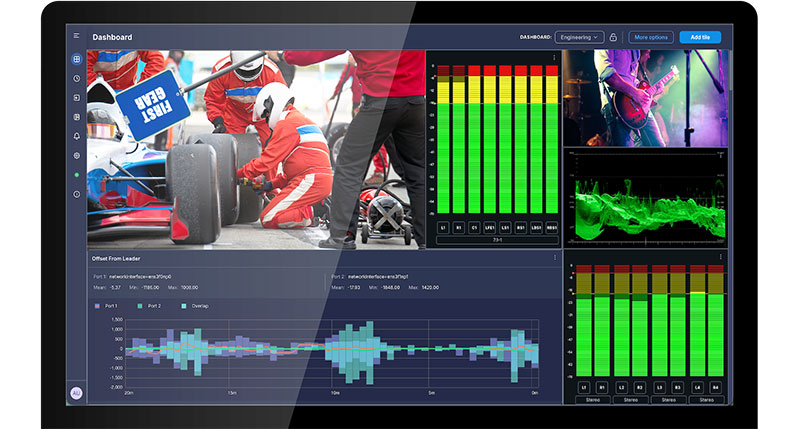


Colour grading studio WeMakeColor in Mexico integrated Baselight alongside DaVinci Resolve, allowing the team to customise its approach to creative and technical demands of each project.
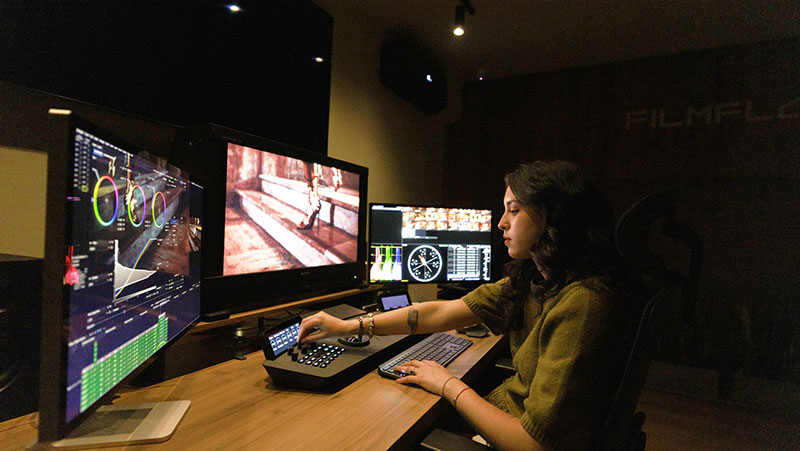
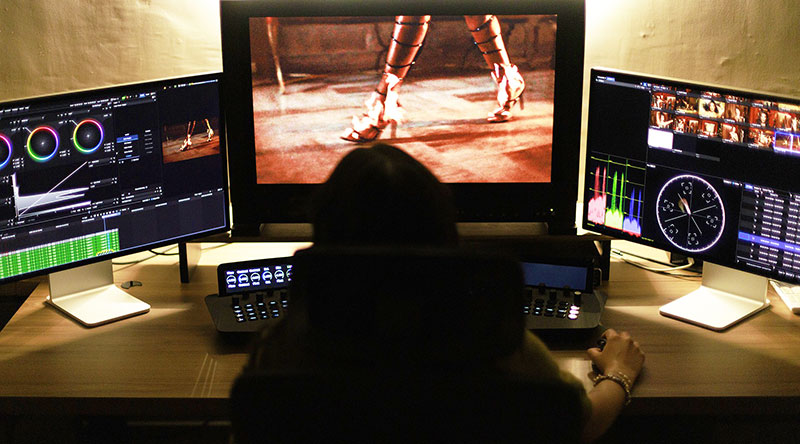
WeMakeColor, a colour and post-production studio with facilities in Mexico City and Bogotá, Colombia, has expanded its range of expertise with the integration of FilmLight's Baselight for macOS, furthering the studio’s goal to evolve into a hybrid facility working on both Blackmagic DaVinci Resolve and Baselight grading systems.
The investment means the studio can support a broader range of workflows and meet the more exacting demands of international productions today. It also forms part of a phase of growth for the company that includes the development of a larger, purpose-built facility in Mexico City that will support an expansion of their post services.
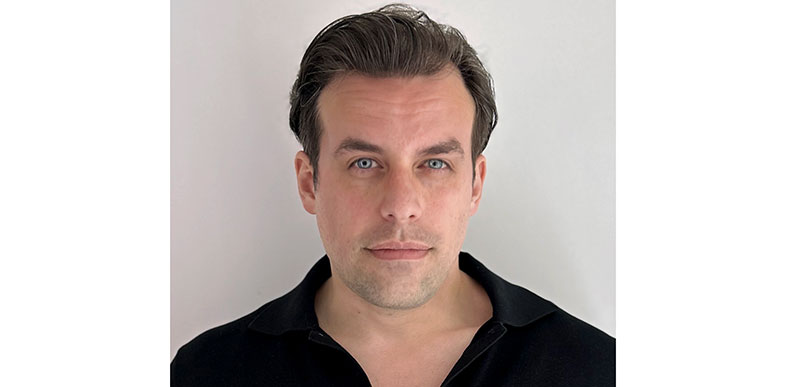
WeMakeColor founder and lead colourist, Felipe Martínez U, describes the move as both a creative and strategic decision.
A More Complete Artist
“Resolve has been a fundamental part of my journey as a colourist over the past decade – it shaped how I understand and work with images,” he said. “But bringing Baselight into the studio challenges me in new ways. It invites a different way of thinking about colour that is more intentional and precise. Together, the two systems allow us to be more versatile and ultimately make me a more complete artist.”
By combining the flexibility and accessibility of DaVinci Resolve with the precision and depth of Baselight, WeMakeColor is able to tailor its approach to the creative and technical demands of each project, particularly across long-form series and feature film work. As well, Felipe believes a cross platform approach creates a more tactile, precise and customisable workflow for the studio’s artists.
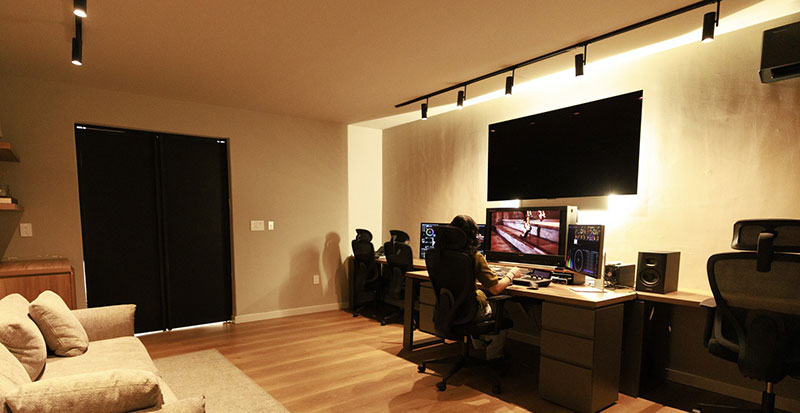
As mentioned above, Felipe has spent more than ten years building his ‘colour universe’ inside DaVinci Resolve. From workflows and automations, to LUTs and DCTLs, Resolve hasn’t only been his main tool, but the language he uses to interact with colour in moving images.
So when FilmLight gave him the chance to try Baselight for Mac, together with a Slate console, he accepted with the feeling that “something in me was going to change”.
Another Language
He said, “Coming into Baselight from Resolve has been, in fact, a bit like switching languages while still talking about the same subject – light. The first impression is confusion – there are no nodes, no serials or parallels. Instead, there are operators, stacks and a way of thinking that, I’d say, feels much more logical and linear.
"Soon, that apparent rigidity becomes clarity, and it’s not rigid at all. I feel Baselight invites you to treat each adjustment like a cinematographic decision. There’s a reason each tool exists – nothing is extra. That conceptual economy makes the act of grading feel beautiful and also very grounded."
Resolve is ideal as an omnipresent system, Felipe notes – a Swiss army knife that standardises post-production when it comes to image, making it approachable by a much wider group. “I wouldn’t be a colourist without Resolve. Blackmagic allowed many of us to learn, experiment and grow without the weight of cost or infrastructure. That should be recognised and celebrated,” he said.
Seeing Differently
“Baselight, on the other hand, is something else. It doesn’t want to standardise; it wants to refine. It doesn’t say, ‘Here are a hundred ways to do the same thing.’ Rather, it says, ‘Here are carefully considered ways to do this task.’ In that sense, Baselight is precision and depth, software that makes you aware that you need to be present and know why you’re making each adjustment.”
The way Baselight works with density, saturation and contrast gives users access to the science and engineering behind Base Grade, which was originally developed for Baselight 5 some years ago. This access to the engineering makes Baselight one of the most balanced, visual tools he has tried. He said, “It’s not about saying Baselight ‘looks better’. From my point of view, it’s that it invites you to see differently. It invites you to consider intention instead of just the tool; continuity instead of correction.”
Hands On
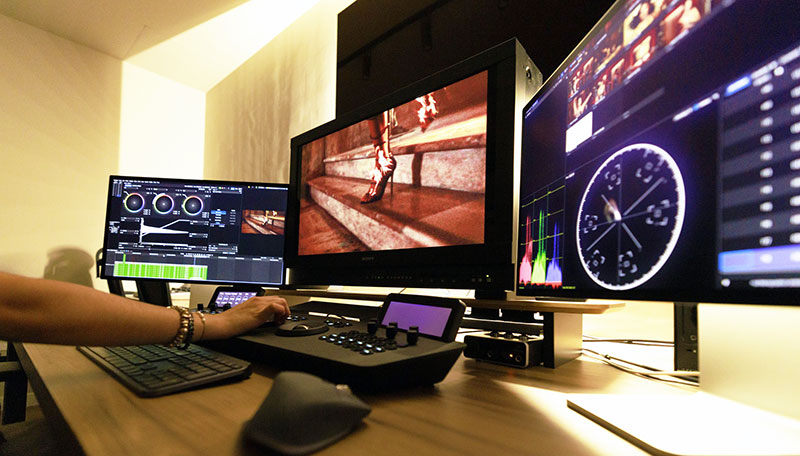
Working with the Slate console completes the relationship colourists build with the software. Speed is not the only factor, because at first glance both the Slate panel and the Resolve panels respond with precision, measurable down to the millimetre. The difference is about how the interaction is conceived in the real world. “Everything is well organised through the buttons, the logic of the shortcuts and – most important – the customisation is incredible,” he said.

Founder and Lead Colourist, Felipe Martínez U, WeMakeColor
“I can implement a different layout on the panel for each colourist in the studio, adapted to what each one needs. That ability to adapt truly transforms how you interact with the software and that, in turn, is important for a studio like WeMakeColor, where human talent comes first. In this case, the fact that the console adapts to the talent and not the other way around is a critical strength.”
Different Leagues
One fact he took care to mention is that Baselight has a high entry point, which he sees as probably its main barrier. “Resolve and Baselight cannot and should not be compared in that sense, because they play in different leagues. Resolve’s purpose is to be an all-in-one, widely accessible tool, and that’s great because it opened the door for an entire generation of colourists. At the same time, it’s so powerful that it has a huge place even in the biggest studios and productions in the world.”
Baselight, meanwhile, aims for exclusivity supported by precise, consistent, thoughtful design, and by a team of engineers with a deep understanding of colour science. That reputation is well recognised industry-wide, along with top-level technical support.
I doesn’t surprise him, therefore, that many high-end studios choose Baselight. “In my case, when you reach a point in your career where what you want is to improve the way you work and how you approach the image, investing in a tool like this can make sense. Baselight isn’t for everyone, but if ever you can access it, it will probably change your relationship with the image.”
Widening the Scope
In parallel, the studio continues to build its roster of international colourists and expand its talent and presence across the globe, supporting projects ranging from high-end series to feature films and restoration work.
“For us, this isn’t just about technology – it’s about people and craft,” said Felipe. “We want to create an environment where colourists can work at the highest level, using the tools that best serve our customers and their story. As we continue to grow and expand our services, this investment is an important step in that journey.” wemakecolor.com