

Cinema 4D now runs professional 3D workflows on iPad, ZBrush expands to Windows on Arm, Autograph re-emerges as a free app.
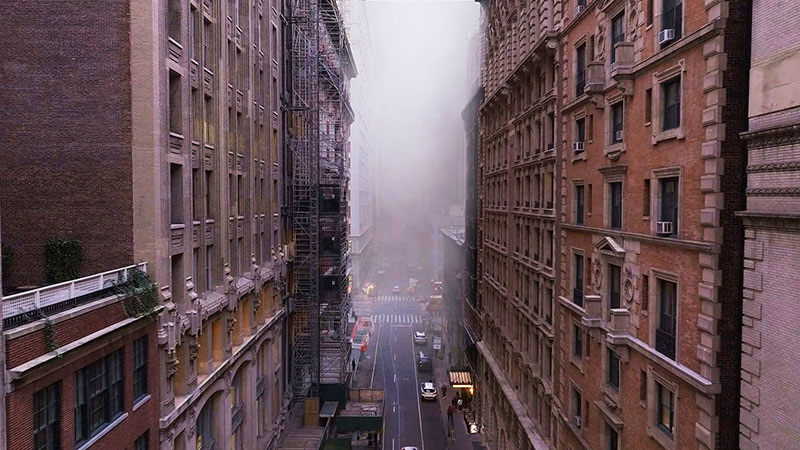
Red Giant depth generator
Maxon is continuing its efforts to make professional creative tools more accessible to a wider market with the debut of Cinema 4D on iPad, the return of the Autograph motion graphics application, and the expansion of Maxon tools to tablet devices built on Windows on Arm architecture.
As demand for 3D and motion content accelerates across social media, streaming, gaming and immersive media, more types of creators are looking for flexible, affordable entry points into graphics workflows. Traditionally, professional creative applications have been limited to desktop and required significant software and hardware investment. For this release, Maxon has developed new free-access tiers and mobile-first workflows to make its tools more attainable without compromising professional capabilities.
"Accessibility, interoperability and user autonomy and choice are increasingly central to creative innovation," said Dave McGavran, CEO of Maxon. "We're expanding access to professional tools so more artists have opportunities to experiment and grow within a connected ecosystem, using the same tools used professionally in film, broadcast and design."
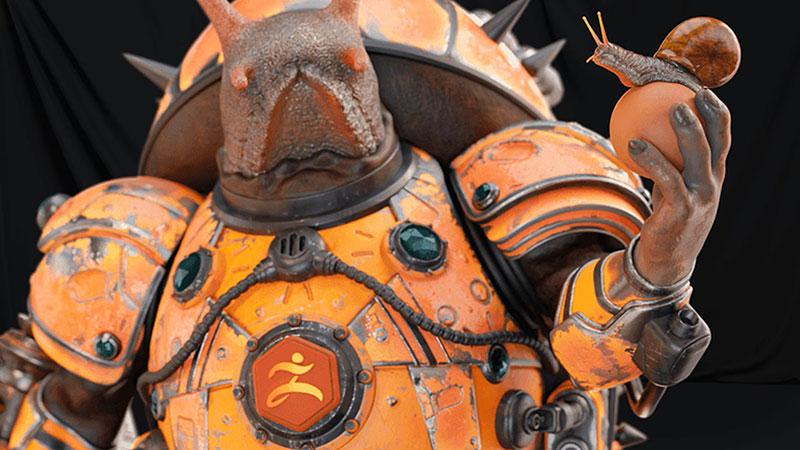
Maxon Expands to Windows on Arm Hardware
Maxon is bringing its complete series of applications to hardware running on Windows on Arm – including Dell's tablet lineup, Microsoft Surface Pro (Snapdragon X Elite) and other compatible tablets and desktop systems – making its 3D, motion graphics and digital sculpting tools more ubiquitous and adaptable to modern workflows.
ZBrush (desktop), Cinema 4D and Red Giant tools within Adobe Premiere Pro and After Effects are all now available on Windows on Arm-powered devices. Redshift is also supported on Windows on Arm with CPU rendering capabilities.
Cinema 4D for iPad – 3D Leaves the Desktop
For iOS, Maxon opened the beta version of Cinema 4D for iPad at NAB 2026, standing out as a professional 3D tool available on a mobile platform. Optimised for touch workflows, Cinema 4D for iPad has core 3D modelling and design tools accessed through a simpler, dedicated mobile interface. The iPad version, recommended for iPad with M3 chip or later, is an adjunct to the desktop experience – artists can explore ideas and work on projects while outside an office. It will be available in late 2026.
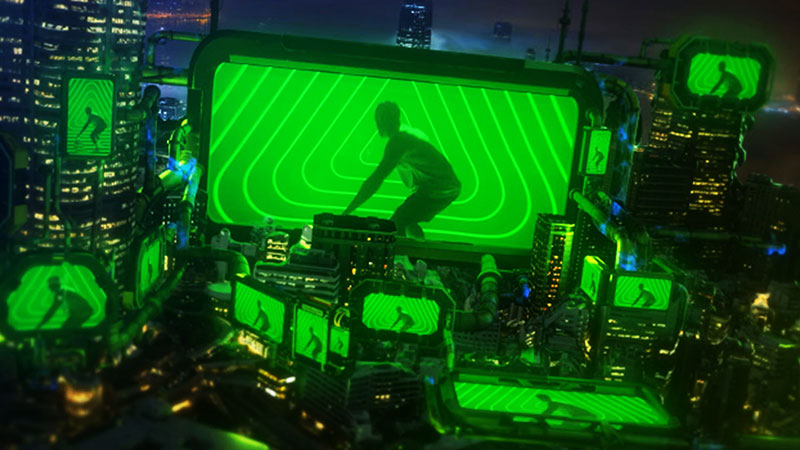
Cinema 4D is known for accessibility and ease of learning, combined with an ability to meet professional 3D demands. Bringing these capabilities to iPad can also make 3D creation more approachable for emerging artists who need tools that are compatible with modern production pipelines.
Autograph Returns as a Free Download
Maxon is making Autograph, a motion graphics and compositing application, available again as a free download. Originally designed for motion designers, 2D/3D artists, content creators and compositors by French developer Left Angle – which Maxon acquired in mid-2025 – Autograph now serves as software for experimentation and creative production.
Autograph places 2D animation, compositing and 3D functionality in a single environment optimised for speed and flexibility. Its key features include a native Cloner system for dynamic, iterative animations, useful for designers building complex motion graphics, and responsive design tools that allow simultaneous creation and adaptation across multiple aspect ratios – all of which suit quick, multi-platform content production.
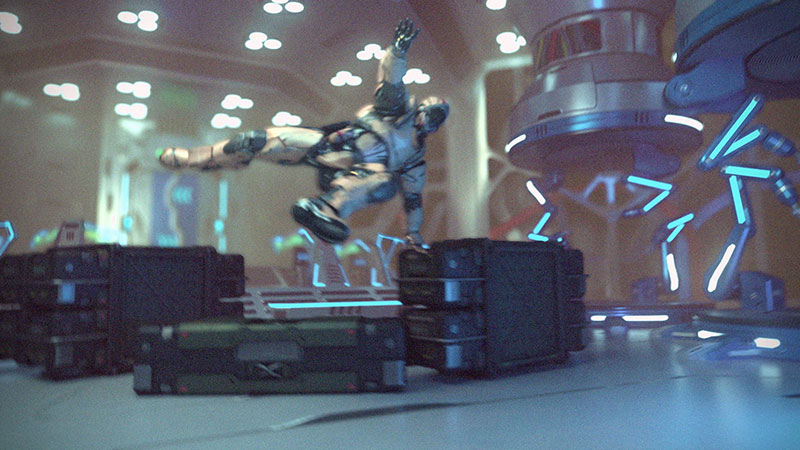
Layer-Based Compositor
A layer-based compositor, Autograph has a standard layer-stack timeline that is combined with a 3D mode for viewing and manipulating 3D assets. Its system of Generators are a simpler alternative to a node graph for creating procedural content, and its Modifiers are also a simple alternative to expressions. Its Instancer can be used to generate multiple design or language variants of a project.
Autograph’s 3D workflow is based on USD and, to ease pipeline integration, it supports other standard file formats including SVG for vector graphics, PSD, ACES, OpenColorIO and OpenEXR for layered images for 3D assets. It reads and writes a range of video formats as well, supporting ProRes, VP9, H.264, HEVC and AV1 codecs.
Autograph supports OpenFX (OFX) for compatibility with third-party plugins such those from Boris FX, Digital Anarchy, Red Giant and RE:Vision Effects. Users can access all Universe plugins and Red Giant OFX tools (license required) directly within Autograph from the list of Modifiers. They can also be accessed from the integrated Maxon Studio plugin page. (See below under Red Giant.)
SPRING 2026 MAXON ONE RELEASE
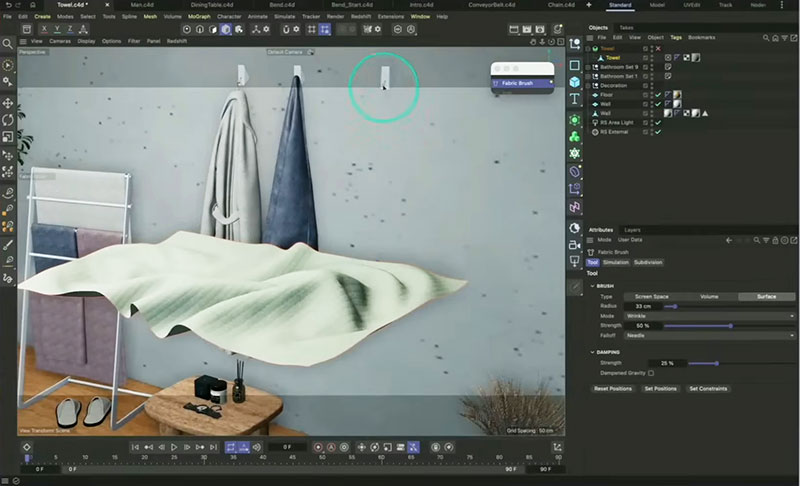
Fabric Brush
Cinema 4D
The Fabric Brush, powered by Cinema 4D’s simulation system, drapes, folds and sculpts soft objects without resorting to complex rigs or slow sculpting. For placing folds in clothing or shaping packaging, the geometry can be brushed into position, and simulation allowed to fill in the detail.
The new symmetry option for the Bend deformer makes mirrored bends possible from a single deformer. Bending symmetrically around the centre of an object used to require several deformers and manual synching of parameters, or complex rigging. The new Bend Deformer solves this through a simpler setup of symmetrical bends.
When working with complex scenes that contain dozens of materials, the Active Object Material Filter quickly filters the Material Manager to show only the materials of the currently selected object. Users can skip manual layer setup, and focus on the current task.
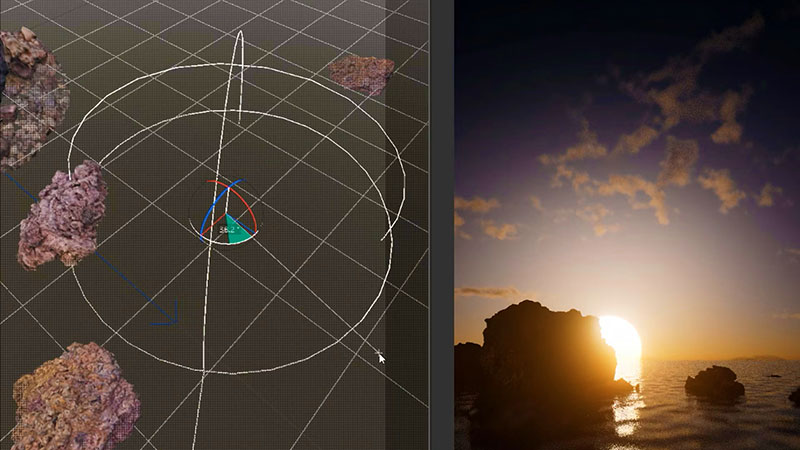
The Target Effector has a new Loop option for results such as a radial array or clones on a closed spline. The first and last clones now target each other for precise circular or looped motion graphics effects
Zbrush
In ZBrush for desktop, ZBrush sculpts can be transferred to Substance Painter in one click with the Substance Bridge. Users can start on painting, texturing and setting up materials right away, and access ZBrush on smaller, portable devices with new native Windows on Arm support. ZBrush for iPad has new custom hotkeys that transition between iPad and desktop for faster sculpting with identical controls.
GoZ integration is updated to allow users to send models from ZBrush directly to Maya 2026 and 3DS Max 2026 with preserved topology, textures and materials.
Redshift
Inside the Redshift IPR (Interactive Preview Renderer), users can monitor their work using Texture Displacement. Based on texel density instead of vertex density, this method of displacement minimises the amount of subdivision levels required. Texture Displacement will now work with polygon selections, UVs outside the zero-to-one square in the UV Editor, and the projection types in the Cinema 4D Material Tag.
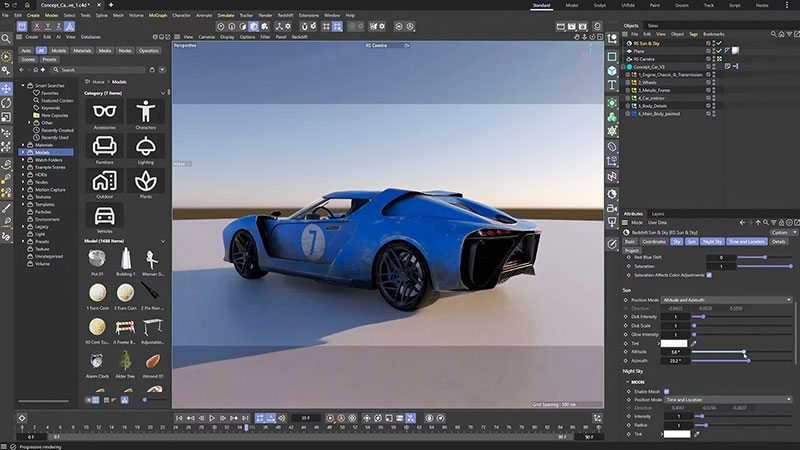
Redshift Live rendering mode
OpenPBR is now the default material in Cinema 4D. The Material Menu highlights OpenPBR, but has a new preference allowing users to switch it. Older options are removed.
Redshift has a new Night Sky option that fills in the background of a nighttime scene quickly with a complete sky system for any time of night at any location in the world. Users match their night sky to a chosen set of conditions – urban or rural – with the Milky Way on full display.
The next release of Redshift will introduce Hex tiling, a new tiling method for textures that breaks up unnatural repetition on broad, flat surfaces and works well for organic materials across large surfaces. No masking is needed. Redshift Live is a new rendering mode built for interactive performance and high visual quality. It serves as an alternative to Redshift Production and replaces Redshift RT.
Red Giant
Maxon Studio has a new plugin tab where users can manage, discover and launch the Red Giant and Universe tools, presets, Capsules and learning content. Discovery is visual, and oriented to different contexts - editing, compositing, motion design and so on. Users can now save and reuse custom Capsules, with linked assets like videos and textures embedded within them, and build up a custom library of portable motion graphics, effects, looks and modular setups.
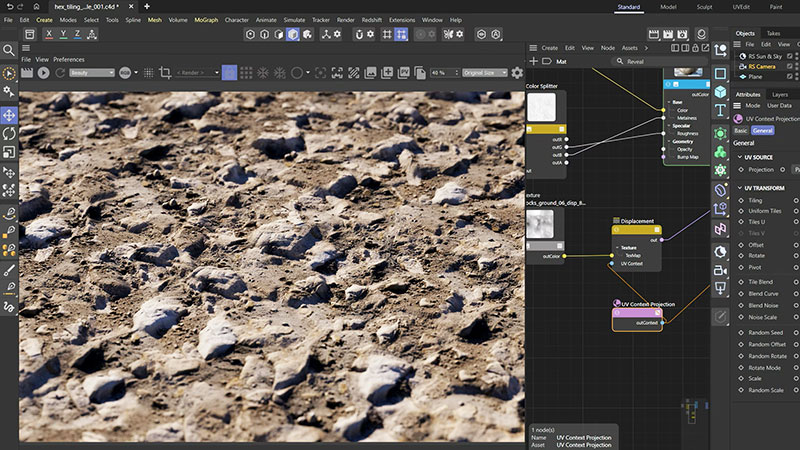
Hex tiling method for textures
The Depth Generator tool creates Depth Passes from footage, inside After Effects. Using it with other Red Giant tools, you can swirl particles with Particular, simulate depth of field using Bokeh, and enhance footage with VFX elements like fire, smoke and fog. Depth Generator, powered by AI running on the local machine, analyses the images and produces a grayscale representation of the depth of the shot. Users select the desired resolution of the depth pass and use an interactive depth isolation curve to refine the output.
More Open Access
Maxon says it is expanding professional tools beyond conventional desktop-only environments and introducing free tiers, so that more creatives can access high-end creative workflows. While desktop versions of Cinema 4D and ZBrush are still necessary for complex simulations and production pipelines, and large-scale scenes, the new mobile options can work as entry points for students, independent creators and professionals seeking flexibility.
www.maxon.net